Last updated on June 5th, 2026
Managing money can feel overwhelming, especially when you’re balancing work, family, and everyday responsibilities.
Without the right tools, staying on top of your finances can quickly become frustrating and leave you feeling like you’re constantly playing catch-up.
Fortunately, today’s budgeting apps make managing your money easier than ever. Whether you’re looking for a simple way to track spending, create a realistic budget, save for future goals, or pay down debt, there’s an app designed to fit your needs.
In this guide, you’ll discover some of the best budgeting apps both free and paid available, along with their key features, strengths, and pricing, so you can choose the right tool to support your financial journey.
Let’s explore the apps that can help you spend intentionally, save confidently, and build a healthier relationship with money.
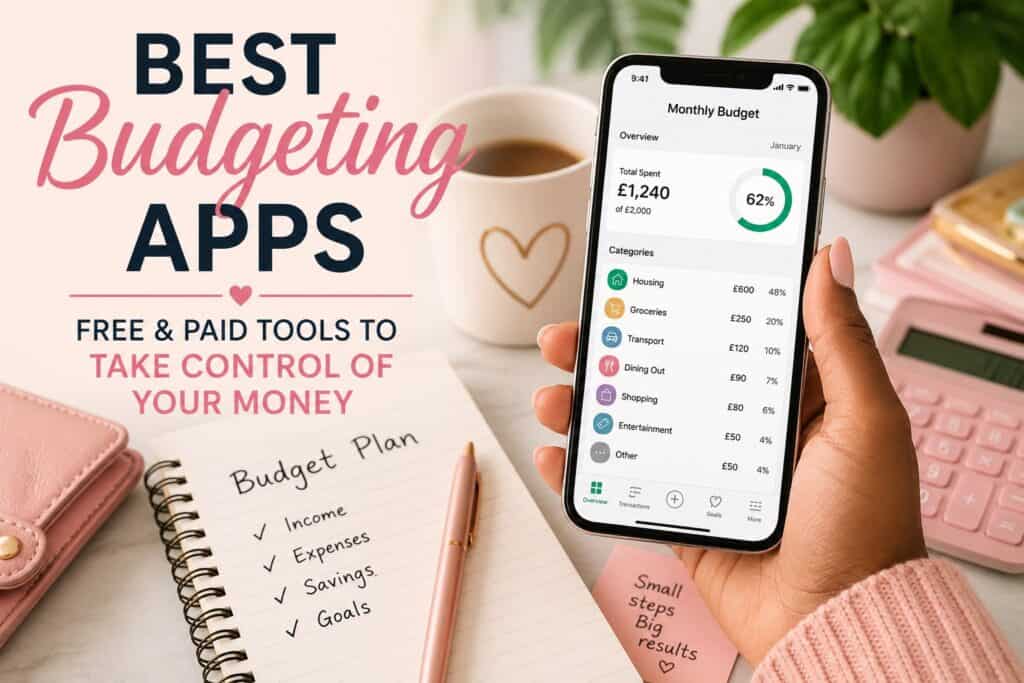
Why Budgeting Apps Matter for Personal Finance
Managing personal finances has always been important and the tools at our disposal are more sophisticated and accessible.
Budgeting apps are reshaping how you interact with money. These apps are here to simplify and revolutionize the way you handle your finances.
The Value of Technology in Modern Budgeting
Technology has come a long way, and budgeting apps are a prime example of how innovation can improve our lives.
Modern budgeting tools go far beyond basic expense tracking.
They’ve evolved into powerful assistants that integrate effortlessly with your daily life. Here’s how they stand out:
- Real-time Synchronization: Whether you’re updating your budget from your phone, laptop, or tablet, modern apps seamlessly sync across devices. This means no more juggling spreadsheets or worrying about outdated data.
- AI-Powered Insights: Today’s apps analyze your spending patterns and proactively suggest ways to save. For instance, they might pinpoint recurring subscriptions you’ve forgotten about or show you how small tweaks in your grocery budget can lead to big savings over time.
- Custom Recommendations: These tools don’t take a one-size-fits-all approach. They adapt to your financial situation, whether you’re saving for a home, paying off debt, building an emergency fund, or planning for retirement. Apps like YNAB, Monarch Money, and Rocket Money offer personalized insights designed to help users make smarter financial decisions based on their spending habits. Learn more about simple financial strategies in this guide to self-care budgeting.
When technology works this well, it starts to feel like you have a financial mentor sitting right in your pocket.
Key Benefits of Using Budgeting Apps
Why should you care about these apps? Because they automate what used to be time-consuming and overwhelming.
They don’t just track your dollars, they add clarity, confidence, and control to your financial life. Here’s what makes them indispensable:
- Automation Simplifies the Process: Forget tedious manual calculations. Modern apps automatically categorize your spending, sync with your bank accounts, and even remind you to pay bills. Apps like YNAB take the guesswork out by automatically creating budget categories tailored to your lifestyle.
- Real-Time Tracking Prevents Overspending: Picture this: You’re at your favorite store, about to splurge, but the app quickly alerts you that you’ve hit your monthly shopping limit. That kind of insight can help you stick to your goals.
- Spending Analysis Offers Awareness: Have you ever wondered how it all adds up so quickly? Budgeting apps create deep dives into your habits, showing you exactly where those little coffee runs or subscription plans are chipping away at your savings.
Through offering everything from detailed spending summaries to instant reminders, these budgeting apps act like a personal finance coach.
You’re building a better understanding of what truly matters in your financial life.
Quick Comparison of the Best Budgeting Apps
| App | Best For | Free Version | Paid Version |
|---|---|---|---|
| YNAB | Zero-based budgeting | Trial only | Yes |
| Rocket Money | Subscription tracking & saving money | Yes | Yes |
| Goodbudget | Envelope budgeting | Yes | Yes |
| PocketGuard | Preventing overspending | Yes | Yes |
| Spendee | Expense tracking | Yes | Yes |
| NerdWallet | Beginners | Yes | No |
| Monarch Money | Overall money management | Trial only | Yes |
| Quicken Simplifi | Financial planning | Trial only | Yes |
| EveryDollar | Debt payoff budgeting | Yes | Yes |
| Empower | Net worth & investments | Yes | Optional wealth management |
| Actual Budget | Privacy-focused budgeting | No | Low-cost |
Best Budgeting Apps by Need
- Best Overall: YNAB
- Best for Beginners: NerdWallet
- Best for Cutting Expenses: Rocket Money
- Best for Families: Goodbudget
- Best for Preventing Overspending: PocketGuard
- Best for Wealth Building: Monarch Money
- Best for Investments and Net Worth Tracking: Empower
- Best for Privacy: Actual Budget
- Best for Debt Payoff: EveryDollar
- Best for Expense Tracking: Spendee
Top Free Budgeting Apps Worth Exploring
Taking control of your finances is easier now, with the perfect tools at your fingertips.
Whether you’re a meticulous planner or someone who just wants some clarity about where your money is going, free budgeting apps offer something for everyone.
Here’s a roundup of some of the best free budgeting apps available today.
1. YNAB (You Need a Budget): Zero-Based Budgeting Excellence
YNAB takes a proactive approach to budgeting and is perfect if you’re ready to take a hands-on role in managing your finances.
Using a system called zero-based budgeting, every dollar in your budget is assigned a purpose, encouraging you to actively decide where your money should go.
The app syncs effortlessly with your bank accounts, tracks transactions, and allows you to reflect on your spending habits.
But YNAB doesn’t stop at numbers. It also offers extensive educational resources like webinars and guides to help you improve your relationship with money.
If your financial goals include paying down debt, building savings, or just feeling more empowered about your spending decisions, YNAB could be a game-changer for you.
Cost: You can pay $14.99 monthly or save by choosing the annual plan at $109 but there’s a free 34-day trial to test things out first.
Plus, you can split the subscription with up to five friends or family members, making it even more budget-friendly.
And if you’re a college student, great news, you get a whole year of YNAB for free!
For more tips on mindful money management that ties into self-care, check out this guide.
2. Goodbudget: Digital Envelope Budgeting
Goodbudget revives the traditional envelope budgeting system and reimagines it for the digital age.
Instead of stuffing cash into envelopes, you assign money to digital “envelopes” for specific spending categories like groceries, entertainment, or bills.
The app’s interface is simple and user-friendly, making it easy to track your spending and control your finances.
Goodbudget shines in allowing you to plan for upcoming expenses and save for larger goals.
Plus, it’s great for households, offering functionalities to sync across multiple devices so everyone stays on the same page financially.
Cost: Goodbudget has a free option to get you started. If you want more features, you can upgrade to Goodbudget Premium for $10 a month, or save a bit by paying $80 for the year.
Want to integrate financial discipline into your lifestyle? Start with tools like Goodbudget to make saving as intuitive as spending.
3. PocketGuard: Know What’s Safe to Spend
If understanding your disposable income feels like solving a mystery, PocketGuard makes it simple.
This app’s standout feature is its ability to calculate how much money you truly have available for spending after accounting for savings goals, bill payments, and other essentials.
PocketGuard’s dashboard provides a crystal-clear overview of your finances, ideal for anyone prone to overspending or needing a gentle reminder to stick to their limits.
Think of it as that cautious friend who tells you, “Maybe hold off on buying that fancy coffee machine this month.” It’s perfect for avoiding those end-of-the-month surprises.
Cost: PocketGuard offers a free version with basic budgeting features. For enhanced functionality, PocketGuard Plus is available at $12.99 per month or $74.99 per year.

4. Spendee: Expense Tracking Simplified
Spendee feels like a breath of fresh air when it comes to expense tracking.
With its visually appealing graphs and straightforward interface, it’s designed to help users monitor their finances without feeling overwhelmed.
You can link your bank account, manually add transactions, and categorize expenses for better insight into your money habits.
For anyone chasing financial clarity, Spendee gives you the tools you need to spot spending trends and adjust accordingly.
If you value simplicity paired with effectiveness, this app should be on your radar.
Cost: Spendee offers a free basic version. For more advanced budgeting features, you can upgrade to:
- Spendee Plus: $14.99 per year.
- Spendee Premium: $35.99 per year.
5. NerdWallet Budgeting App: A Central Hub for Financial Insights
NerdWallet is more than just a budgeting app, it’s your go-to hub for all things personal finance.
If you’re new to budgeting or just looking to simplify your money, NerdWallet’s budgeting app makes life easier. It gives you a clear view of your spending, savings, and financial goals, all in one place.
The app breaks down your expenses into easy-to-understand categories, helps spot trends, and even provides personalized tips to keep your finances healthy.
Best of all? NerdWallet’s app is completely free. It’s simple, user-friendly, and ideal if you want to track your money without feeling overwhelmed.
Whether you’re new to budgeting or looking to refine your strategy, the options make it easier than ever to manage money while staying stress-free.
6. Rocket Money: Best for Cutting Unnecessary Expenses
If subscriptions seem to multiply without you noticing, Rocket Money can help.
Rocket Money is one of the most popular budgeting apps because it combines budgeting tools with subscription management. It helps you identify recurring charges, track spending, create budgets, and even cancel unwanted subscriptions.
Many users discover forgotten subscriptions costing them hundreds of pounds or dollars each year.
The app also provides spending insights and budgeting tools that help you stay on track without feeling overwhelmed.
Cost: Rocket Money offers a free version with budgeting and spending tracking features.
Premium plans start at a flexible monthly fee depending on the services selected.
Best For: People looking to reduce monthly expenses and gain more control over recurring subscriptions.
Paid Budgeting Apps Worth the Investment
While free apps offer foundational tools, paid options often provide advanced features tailored to deeper insights, smarter planning, and personalized advice.
Let’s dive into some premium choices that stand out and why they might be worth every penny.
7. Monarch Money: AI-Driven Financial Tracking
Monarch Money takes budgeting to the next level by using artificial intelligence to help you better understand your financial habits.
Imagine having something that not only tracks your expenses but learns from them, giving you predictions about future spending trends.
Monarch helps expose areas where small changes can result in big savings over time.
What’s especially handy? It organizes your finances across categories like investments, loans, and subscriptions, all while forecasting upcoming bills and expenses.
It’s like having a financial coach that gets smarter the more you use it.
Monarch remains a favorite for hands-on users determined to master both their short-term budget and long-term goals.
Cost: Monarch Money offers a subscription plan priced at $14.99 per month or $99.99 annually.
New users can take advantage of a 7-day free trial to explore the app’s features before committing.
Additionally, Monarch allows you to invite collaborators, such as family members or financial advisors, to your account at no extra cost, facilitating shared financial management.
Learn more about integrating financial strategies in this money empowerment guide.
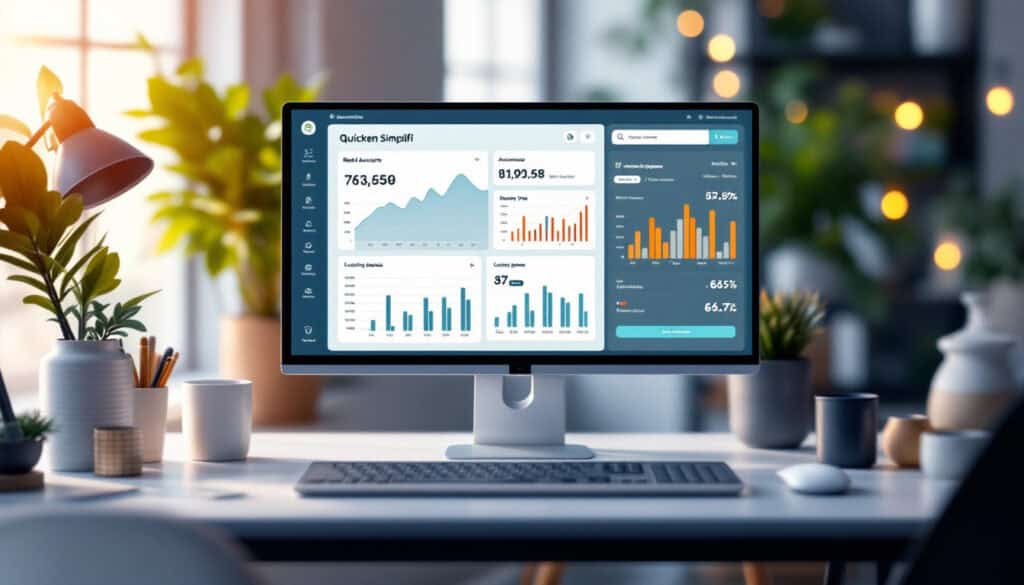
8. Quicken Simplifi: Feature-Rich Software
Quicken Simplifi is perfect for people who want full control over their financial planning.
With its real-time account sync, you always see the big picture, including balances, upcoming expenses, and savings goals.
Whether you’re micro-managing grocery spending or strategizing for a home purchase, Simplifi helps customize a plan just for you.
It’s user-friendly for beginners yet versatile enough for budgeting enthusiasts who love diving into detailed reports.
For those who enjoy a highly visual breakdown of their finances, Simplifi shines with customizable graphing tools and alerts.
Do you crave accountability? This app nudges you if you stray from your set path.
Quicken offers a range of subscription plans tailored to different financial management needs.
Here’s a breakdown of their current offerings:
- Quicken Simplifi: Designed for personal finance management, this plan is available at $2.99 per month, billed annually.
- Quicken Business & Personal: Ideal for managing both business and personal finances, this subscription costs $3.99 per month, billed annually.
- Quicken Classic Deluxe: This plan provides enhanced features for personal finance tracking at $2.99 per month, billed annually.
- Quicken Classic Premier: Offering advanced investment tools and tax planning features, this subscription is priced at $4.19 per month, billed annually.
- Quicken Classic Business & Personal: For comprehensive management of both business and personal finances, this plan costs $5.99 per month, billed annually.
9. EveryDollar: Dave Ramsey’s Zero-Based Budget Companion
EveryDollar simplifies personal finance by strictly following Dave Ramsey’s zero-based budgeting method.
Not sure what that means? It’s all about planning for every single cent of your income before you spend it, so you know exactly where your money goes.
Unlike other apps, EveryDollar keeps things straightforward, walking you through creating a budget step by step.
It’s particularly awesome for families and individuals dedicated to becoming debt-free or building wealth following Ramsey’s principles.
In just a few uses, EveryDollar can feel like the supportive financial partner you never knew you needed.
It’s a classic choice for anyone inspired by the “baby steps” financial approach.
EveryDollar offers two versions to help you manage your finances
- Free Version: This basic option allows you to manually create budgets and track expenses without any cost.?
- Premium Version: For enhanced features, such as bank account synchronization and automatic transaction imports, you can opt for the premium subscription. It is priced at $17.99 per month or $79.99 per year, following a 14-day free trial.
Additionally, the premium version includes access to group coaching calls with financial experts, providing guidance on budgeting, debt management, and investing.
10. Actual Budget: Best Privacy-Focused Budgeting App
Actual Budget is an open-source budgeting tool that has gained popularity among people looking for an alternative to subscription-heavy financial apps.
It offers envelope-style budgeting, strong privacy controls, and complete ownership of your financial data.
Unlike many budgeting apps that rely heavily on cloud services and data collection, Actual Budget gives users more control over where and how their information is stored.
Best For: People who value privacy, data ownership, and a straightforward budgeting experience.
Cost: Low-cost subscription or self-hosted options available.
11. Empower Personal Dashboard: Best for Tracking Investments and Net Worth
Empower is an all-in-one platform that merges personal finance with powerful investment insights.
Its Personal Dashboard tool blends budgeting with real-time tracking of your investment portfolio.
Empower keeps you posted on every financial milestone, whether you’re saving up for a family trip or planning for retirement,
Investing and budgeting might seem worlds apart, but Empower creates a seamless bridge.
The dashboard helps you set priorities and manage expenses by syncing all accounts in one place, from credit cards to IRAs.
It’s particularly helpful for anyone looking for a combination of wealth growth and personal finance management in one app.
Empower Personal Dashboard is a free financial management tool that consolidates your financial accounts, providing a comprehensive view of your net worth, spending, and investments.
While the dashboard and its features are free, Empower also offers wealth management services for clients with at least $100,000 in assets.
These services include access to financial advisors and carry a management fee that starts at 0.89% for the first $1 million, with reduced rates for higher balances.
Paid apps often come packed with premium features not always available in their free counterparts.
Each one has its unique value, from data-rich reports to AI-generated recommendations.
If you’re serious about mastering both the big and small aspects of your finances, these investments could make all the difference.
Interested in building similar habits? Check out this guide to smart savings without sacrifice.

How to Choose the Right Budgeting App for Your Needs
Choosing a budgeting app can feel like picking out the perfect pair of jeans. There’s no one-size-fits-all option.
With so many apps designed to help you get control over your finances, it’s important to find one that aligns with your goals and lifestyle.
Here’s how to figure out which app fits you best.
Free vs. Paid Options: What Should You Prioritize?
Budgeting apps typically come in two flavors: free and paid. So how do you decide which is worth your time, or your money?
Free options are great for beginners or those who simply want basic features like tracking expenses and creating a budget.
These work well if your budgeting needs are straightforward and your income sources are uncomplicated.
On the other hand, paid apps often offer premium tools that can add significant value, particularly if you’re diving deeper into personal finance.
Perfect for users tackling larger financial goals like paying off student loans or managing freelance income.
Think of it this way: if budgeting is like learning to cook, free apps teach you the basics, while paid options are like taking a gourmet cooking class. An investment, but one that can change the game.
For more insights on how to build financial habits that work, check out Empowerment on a Budget.
Usability: Finding a User-Friendly Interface
An app might have all the features in the world, but if it’s confusing or frustrating to use, it won’t stick. Finding an interface that feels intuitive is key. Start by asking yourself:
- Does the app make tracking expenses quick and easy? If it feels like doing homework, it’s not the right fit. A clean dashboard and minimal steps to enter data are essentials.
- Does it sync well with your devices and accounts? Apps like Goodbudget or PocketGuard shine here, letting you know exactly where your money is at a glance.
- Can you check it quickly on-the-go? Mobile-friendly design is a must if you’re busy or planning on using the app multiple times per day.
Apps should feel like a trusty sidekick, making money management feel doable and not overwhelming.
Engage with a couple trial versions to see which ones slide seamlessly into your routine. After all, no one wants to deal with clunky interfaces that feel like a chore.

Features to Look For
Budgeting apps have leveled up, making it easier than ever to stay financially savvy. What should you prioritize when scrolling through dozens of app descriptions?
Here are the can’t-miss features you’ll want to check for this year:
- Account Syncing Across Platforms: Whether you’re linking checking accounts, credit cards, or investment profiles, seamless syncing reduces manual work. It’s like connecting all the pieces of your financial puzzle in one place.
- Goal Setting and Tracking: Look for apps that help you establish financial goals and monitor your progress, whether you’re saving for a vacation or tackling debt.
- Personalized Dashboards: A good app will adapt to your specific behaviors and spending. Customization means you’re not stuck with irrelevant categories or alerts.
- Real-Time Tracking: Everyone’s had that moment where they forget how much they’ve already spent. Apps like Spendee and PocketGuard make it impossible to overspend without a heads-up.
- AI-Powered Insights: Many apps now use artificial intelligence to analyze your habits and recommend smarter ways to save or cut costs. Think of it like a financial advisor in your back pocket.
The right app makes your money feel manageable and meaningful, helping you achieve what really matters.
Make sure to test a few options, especially free trials when available, and prioritize ease of use.
Great financial decisions start with finding systems that support you, not stress you!
For more on improving your financial wellness, explore Financial Self-Care Tips.
If you’ve ever felt like your budget just isn’t working or your self-care routine needs a refresh, I’ve got something perfect for you.
I created a fun quiz designed specifically to help you pinpoint your budgeting blind spots and uncover your unique self-care style.
Want More Personalised Financial Insights?
Budgeting isn’t just about numbers. It’s about understanding your habits, emotions, priorities, and the pressures influencing your decisions.
If you’d like a deeper look at your relationship with money and wellbeing, explore these free Pheel Pretty tools:
- Spending Habits Clarity Quiz – Discover where your money is really going and identify habits that may be holding you back.
- Emotional Spending Quiz – Find out whether emotions are influencing your spending decisions.
- Decision Clarity Tool – Get unstuck when you’re facing an important financial or life decision.
- Life Pressure Check-In – Assess the pressures affecting your wellbeing, finances, and peace of mind.
- Self-Care Check-Ins – Build a healthier relationship with yourself while creating sustainable financial habits.
- Life Tools Hub – Explore our growing collection of tools designed to help you improve your finances, confidence, wellbeing, and everyday decision-making.
Sometimes the biggest financial breakthroughs don’t come from earning more. They come from understanding yourself better.
Tips for Making the Most of Your Budgeting App
Here’s how you can maximize its potential and truly take charge of your finances.
Set Clear Financial Goals
Before you dive into configuring your app, ask yourself, what do you want to achieve financially?
Are you saving for a down payment, cutting back debt, or just trying to not overspend every month?
Creating both short-term goals (e.g., saving $100 a week) and long-term ones (e.g., buying a home in three years) keeps you focused.
Most apps, such as YNAB, allow you to set and track these goals. Break them down into actionable steps inside the app.
Instead of just “save more,” try marking exact savings allocations for categories like groceries, dining out, or subscription services.
Regular Check-Ins and Adjustments
Think of your budget like a fitness routine. It needs consistent check-ins to stay effective.
Make it a habit to review your budget every week or at least once a month.
Did you stick to your spending limits? Is there a category where you constantly overshoot, like dining out or shopping?
Budgeting apps often come with visual data like pie charts or bar graphs. Use this information as a way to adjust moving forward.
Maybe you realize you’re setting an unrealistically low budget for groceries. Adjust it and work to cut costs elsewhere instead of stressing over limits you can’t meet.
Leverage Alerts and Notifications
One of the best features of most budgeting apps is their alerts and notifications.
Instead of being surprised by a declined card or overdue payment, your app can notify you when you’re nearing a spending limit or a bill is coming due.
Apps like PocketGuard or Goodbudget make it easy to avoid unnecessary fees or accidental overspending. Turn on those notifications. You’ll thank yourself later.
This is like your financial guardian that gives timely reminders, so you don’t get off track.
It’s less about micromanagement and more about staying alert for better control of your money.

Combine Self-Care with Financial Planning
Finances and self-care often go hand-in-hand. After all, stress related to money can impact your overall health.
Start by creating a financial plan that alleviates stress instead of adding to it.
Focus on small wins, like cutting back on unnecessary subscriptions or committing to meal planning at home.
These small steps can reduce financial tension while giving you extra cash for something meaningful.
Explore more ways to manage daily pressures at Flourish: Embracing Balance and Prosperity.
Want more insights? Get inspired by expert advice from 6 Ways to Take Control of Your Finances in Uncertain Times.
Remember, a successful financial journey begins with taking that first confident step today.
Continue Your Financial Wellness Journey
If you found this guide helpful, you may also enjoy:
- How to Create a Self-Care Budget That Reflects Your Values
- Financial Wellness Explained: Practical Steps to Take Control
- Spending Habits Clarity Quiz
- Emotional Spending Quiz
- Decision Clarity Tool
- Life Pressure Check-In
Financial wellness isn’t about perfection. It’s about making small, intentional choices that support the life you want to build.
Budgeting Apps FAQs
What is the best budgeting app for beginners?
NerdWallet is a great starting point because it’s free, easy to use, and provides a clear overview of your spending and savings.
Is YNAB worth paying for?
Many users find YNAB worth the cost because its zero-based budgeting system helps them become more intentional with their money and achieve financial goals faster.
Are budgeting apps safe?
Most reputable budgeting apps use bank-level encryption and security measures to protect your financial information. Always enable multi-factor authentication when available.
What is the best free budgeting app?
NerdWallet, Goodbudget, PocketGuard, and Rocket Money all offer strong free versions that can help you manage your money effectively.
Can budgeting apps help me save money?
Yes. Budgeting apps help you track spending, identify wasteful habits, monitor subscriptions, and stay focused on savings goals.
Final Thoughts: Best Budgeting Apps to Take Charge of Your Finances
Modern budgeting apps do more than track spending. They help you make informed decisions, build healthier financial habits, and feel more confident about your future
Whether you’re exploring free options or investing in premium features, the possibilities are endless when it comes to aligning your finances with your personal goals.
Start with apps that suit your current needs, and remember, this is all about progress, not perfection.
Even small steps, like setting up spending alerts or tracking daily expenses, can create a ripple effect.
Over time, these habits improve your financial confidence and reduce stress.
For tips on blending self-care with budget planning, check out How to Create a Self-Care Budget That Reflects Your Values.
To simplify your money management, embrace tools that support your growth and lighten your load.
For more tips on combining financial wellness with daily joy, read Financial Wellness Explained: 7 Practical Steps to Take Control.
Keep going! You’re building a stronger, brighter financial future, day by day.
The best budgeting app is ultimately the one you’ll use consistently. If you’re serious about giving every pound a purpose, YNAB remains one of the strongest budgeting tools available.
If your goal is to cut unnecessary expenses and subscriptions, Rocket Money is worth exploring.
For a complete picture of your finances, including budgeting, savings, and long-term wealth building, Monarch Money and Empower are excellent choices.
Start simple. Choose one app, spend a few weeks learning it, and focus on building sustainable money habits rather than chasing perfection. Small, consistent actions often lead to the biggest financial transformations.
Feeling inspired to take charge of your finances? Pass it on.
Share this with a friend who’s ready to ditch the money stress and start making empowered choices.
Pin it, text it, or drop it in a group chat. Every share helps us build a community of women rewriting their money stories.
Subscribe, share, and let’s make smart money moves – together.